


Polar Bears Are Endangered:
Polar bears have been a threatened species since proposed by the U.S. Fish and Wildlife Service in 2007. Although these bears are endangered and should be protected, they are still threatened. Their biggest danger is caused by global warming. Since greenhouse gases have been emitting ion, it has thrown off the balance of gases causing a change in the environment.
The most influential effect of global warming is the rise in the Earth’s temperature. Since the Earth’s temperature is rising, ice caps are melting and polar bears are not able to rest on ice caps. Polar bears are slowing drowning because they are unable to rest on floating ice caps in the Arctic. To help the survival of polar bears, global warming must be reduced.
The polar bear is native to the Arctic Ocean and it is the world’s largest walking land carnivore. These magnificent creatures can weigh up to 1,500 lbs. Polar bears are said to resemble brown bears; however, what distinguishes polar bears from brown bears is their strange habitat. Their characteristics have adapted to withstand cold temperatures, cold water, swimming and hunting. Polar bears are born on land, but they spend most of their time at sea.
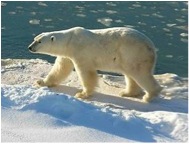
Polar bears are beautiful creatures and amazing sites found in the poles.
Polar bears are very vulnerable because 5 out of the 19 polar bear subpopulations are declining. Polar bears are a large target for hunters because of their beautiful appearance. Controls have been put on hunters to save the polar bears. Another concern for the polar bears is the effects of global warming. Global warming is causing ice caps to melt in the Arctic region which is making it more difficult for polar bears to find food.
The International Union for Concentration of Nature (IUCN) has stated that “if climactic trends continue polar bears may become extirpated from most of their range within the next 100 years”. In 2008, the United States Department of the Interior listed that polar bears are part of the threatened species under the Endangered Species Act. It is said that the polar bear population is stable; however, they are still vulnerable from the acts of humans.
The IUCN along with many polar bear biologists have been expressing great concern about how global warming is affecting the lives and habitat of the polar bears. If the Earth warms a significant amount in temperature, then polar bears will cease to exist. The main cause of polar bear deaths due to global warming will be starvation and malnutrition. Since their main source of food is seals, they must hunt them on floating sea caps. If temperatures rise, than these floating sea caps will eventually melt, making hunting more difficult for the polar bears.
Another problem with the sea caps melting is that it causes the bears to swim longer distances, making it difficult for them to rest, which may result in them drowning. The warming climate could also make it difficult for female polar bears to have a healthy pregnancy because warming waters could cause their maternity dens to be unsuitable for their cubs. These problems will cause further generations of polar bears to have problems breeding and surviving.
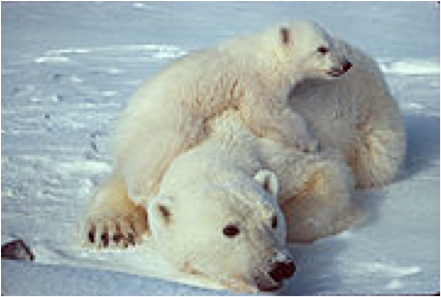
It is necessary that resolutions be found to help the future of polar bears.
It is believed that two thirds of the polar bear population will be extinct by the year 2050 due mostly because of the shrinking ice caps in the Arctic. They would disappear from Europe, Asia, Alaska, Canada and part of Greenland. It is believed that by 2080, a small population of polar bears will reside only in some areas of the Arctic after being eliminated from Canada and Greenland.